US Store Posters & Fixtures: 2026 Surtax Costs
October 13, 2026
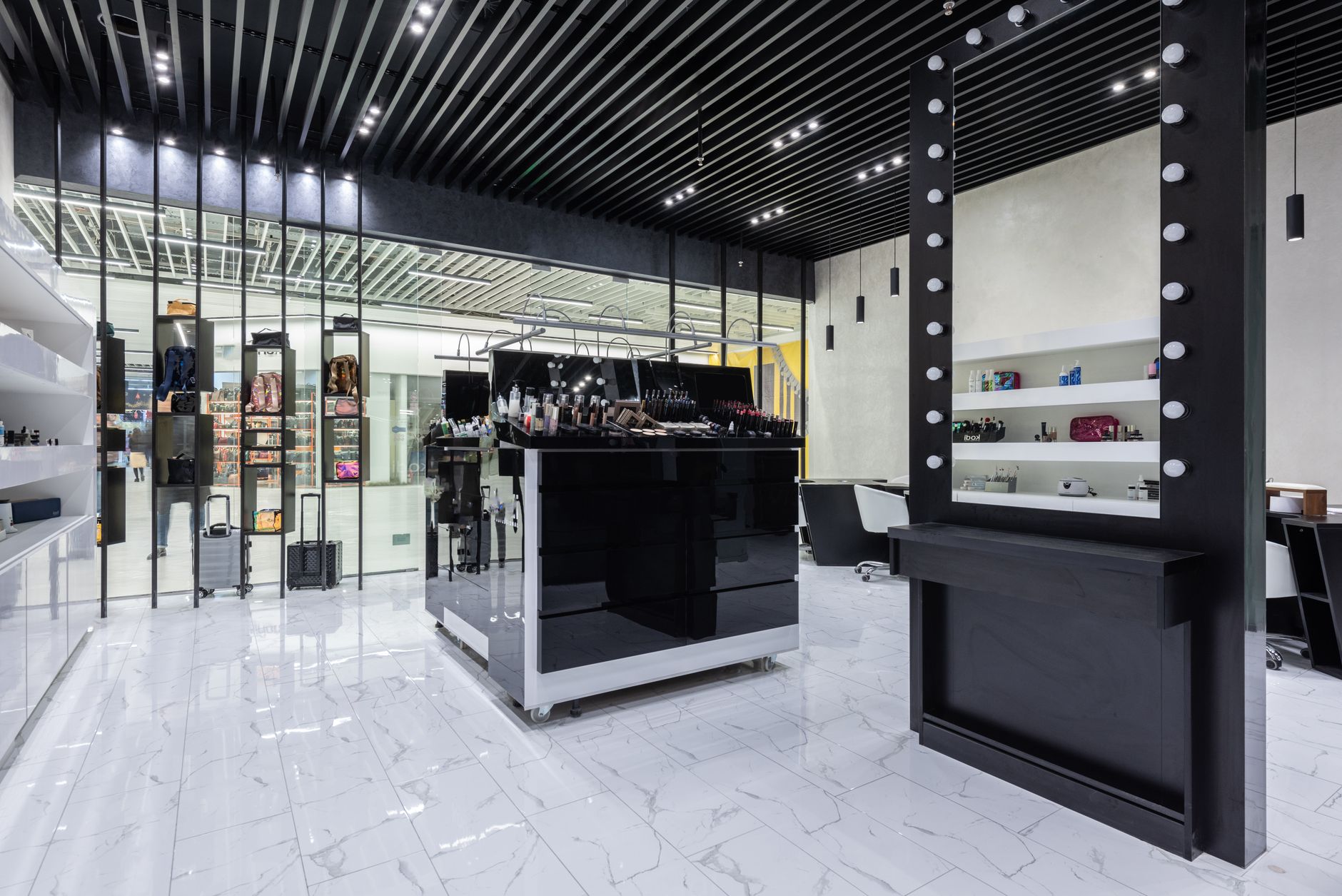
Store posters and fixtures from a US vendor: what the 2026 surtax adds for Canadian retailers
As of October 2026, Canadian retailers importing covered U.S.-origin store posters or fixtures may face a surtax equal to 50% of the goods’ value for duty. The charge is not based simply on having a U.S. vendor. It depends on the product’s country of origin and Canadian tariff classification.
Since September 8, 2026, Canada has applied counter-tariff rates of 15%, 25% or 50% to listed goods originating in the United States under the United States Surtax Order (2026). For retail programs, two Schedule 3 categories deserve particular attention:
- Printed pictures, designs and photographs under tariff item 4911.91.00, which can cover printed posters
- Certain metal and plastic furniture under tariff items 9403.20.00, 9403.70.10 and 9403.70.90, which can include store fixtures
When U.S.-origin goods fall under these listed tariff items, the applicable counter-tariff is 50% of value for duty. References to a “50 percent tariff” in purchasing discussions usually mean this additional Canadian charge, not necessarily the ordinary customs duty rate.
US vendor vs Canadian printer at a glance
A U.S. quote can remain competitive, but Canadian buyers must compare its landed cost and administrative requirements against a Canadian supplier’s quoted cost. Quality depends on the producer, while border exposure, currency conversion and customs work depend on the purchasing route.
| Decision factor | U.S. vendor | Canadian printer or retail-production partner |
|---|---|---|
| Quoted price | Often stated in U.S. dollars and may exclude Canadian border charges | Usually presented for a domestic Canadian transaction |
| 2026 counter-tariff exposure | Potentially 50% for covered U.S.-origin printed graphics and qualifying fixtures | The retailer is not importing the finished order from a U.S. vendor |
| GST treatment | GST is calculated on the value plus the applicable surtax | Normal domestic tax treatment applies to the customer invoice |
| Customs administration | Requires a Canadian customs entry, HS classification and origin information | No customs entry by the retailer for the domestic order |
| Brokerage and clearance | Normally charged to the receiver by the carrier | Not a separate border-clearance task for the buyer |
| Currency | Usually exposes the buyer to CAD/USD movement | Usually quoted and invoiced in Canadian dollars |
| Quality control | Depends on specifications, proofing and vendor controls | Depends on specifications, proofing and production controls |
| Best use case | Specialized products unavailable in Canada, after landed-cost review | Store graphics and coordinated retail rollouts requiring predictable Canadian budgeting |
A small difference in unit price can disappear quickly when the counter-tariff, GST, currency, brokerage and internal customs work are added. The right comparison is landed program cost, not the number at the bottom of the vendor’s initial quote.
How the 2026 counter-tariff changes poster costs
Printed graphics classified under 4911.91.00 are on Schedule 3, so qualifying U.S.-origin goods in that category carry a 50% surtax as of October 2026. The calculation uses value for duty, not the retailer’s eventual selling price or the campaign’s total marketing budget.
For example, consider a hypothetical shipment with a C$10,000 value for duty:
| Cost component | Amount |
|---|---|
| Value for duty | C$10,000 |
| 50% surtax | C$5,000 |
| Value plus surtax, before GST and other charges | C$15,000 |
That C$5,000 is only the counter-tariff. GST, freight, brokerage, possible regular duty and other import costs are separate. A U.S. quote that saves C$800 before importation would not produce a saving if the finished goods attract a C$5,000 charge.
The same budgeting logic applies whether the order contains a few large window graphics or thousands of campaign sheets. Retailers can place the domestic production cost shown through retail graphics & signage pricing beside the complete landed estimate, rather than comparing it only with the U.S. invoice.
Why store fixtures need more classification work
“Store fixture” is a commercial description, not one universal customs classification. The Canada Border Services Agency may classify a rack, sign holder, cabinet or display according to its construction, materials and function.
Certain metal and plastic furniture tariff items that can include retail fixtures are on Schedule 3 at 50% when the goods originate in the United States. Other fixtures may require a different HS classification analysis, especially when they combine:
- Steel or aluminum frames
- Plastic holders or trays
- Wooden panels or cabinets
- Lighting and electrical parts
- Printed graphics
- Replaceable accessories
- Several materials assembled into one display
The vendor’s product name does not settle the matter. “Promotional display,” “floor stand” and “merchandising fixture” may describe similar use cases while producing different customs questions.
Before approving a large fixture order, request the proposed Canadian tariff classification, country of origin, country of manufacture, material breakdown and component list. Retailers importing on their own should have the classification reviewed by a customs broker. The Canada Border Services Agency makes the final determination.
Accent Impression supplies printed store graphics, in-store displays and rollout kitting for Canadian retail programs.
Seller location, manufacturing origin and shipping country are different
Buying from a U.S. company does not automatically establish a U.S. country of origin, and shipping through another country does not automatically remove U.S. origin. As of October 2026, application depends on tariff classification and origin under the CUSMA marking rules, including when U.S.-origin goods arrive from another country, as explained in CBSA Customs Notice 26-23.
A Canadian buyer therefore needs answers to three separate questions:
- Who is selling the product?
- What is its country of origin under the applicable rules?
- Under which Canadian tariff item will it be entered?
An invoice address answers only the first question. Ask for manufacturing and origin information rather than assuming that the country of sale or shipment establishes the customs treatment.
This means an order supplied by a U.S. company is not automatically subject to the counter-tariff merely because the invoice is American. Conversely, U.S.-origin goods do not escape the measure solely because they are warehoused or shipped elsewhere.
GST makes the border difference larger
GST is charged on the value plus the surtax, so the additional charge increases both the import subtotal and the base used for the GST calculation. Brokerage, freight and currency effects can then add further differences between the quoted and landed costs.
The CBSA’s 2026 example shows how the layers accumulate. On a C$150 item subject to a 25% rate, the additional charge is C$37.50 and GST is calculated on C$187.50, producing C$46.88 in counter-tariff and GST together. At 50%, the same C$150 item carries C$75 in additional charges and C$11.25 in GST, for a combined C$86.25.
Procurement discussions may call these measures a “25 percent tariff” or “50 percent tariff,” but buyers should distinguish the counter-tariff from any ordinary customs duty that may also apply. The example is not a graphics quote, but it illustrates why procurement teams should model every charge before issuing a purchase order. The higher tax base is easy to overlook when the vendor’s estimate shows only product and freight.
What still applies when an item is not surtaxed
A product outside the listed tariff items does not attract this particular surtax, but an order from a U.S. vendor is still a commercial import. It requires a Canadian customs entry and can involve brokerage, clearance, currency conversion and border delays.
For uncovered goods, the comparison should include:
| Cost or task | Question for procurement |
|---|---|
| Exchange rate | What CAD/USD rate and contingency will the budget use? |
| Brokerage | Who pays the clearance fee? |
| Customs entry | Who supplies the HS classification and origin documents? |
| Freight | Does the quote cover delivery to the final Canadian location? |
| Delay risk | What happens if goods are held for review? |
| Replacements | How will damaged or incorrect pieces cross the border again? |
| Internal labour | Who will resolve documentation or invoice discrepancies? |
Importers should also verify whether any current remission order applies to their specific goods and circumstances. Remission is targeted relief, not an automatic exemption, so it should not be included in a landed-cost estimate without supporting eligibility and documentation.
The rules have changed several times since early 2025 and may be amended again. A domestic order does not make the retailer’s purchase dependent on those border measures, which can be valuable when a campaign has fixed store dates and a firm approved budget.
Which option should a Canadian retailer choose?
Choose a Canadian production partner when budget predictability, coordinated graphics and a multi-store rollout matter most. Consider a U.S. vendor when it offers a genuinely specialized product, but only after confirming origin, classification and complete landed cost.
Choose Canadian production when
- The order contains printed posters that may otherwise face the Schedule 3 rate.
- Store graphics, fixtures, labels and kits must arrive as one coordinated program.
- The campaign has many destinations across Quebec or Canada.
- Procurement wants pricing in Canadian dollars.
- Marketing needs colour and version control across windows, walls, shelves and displays.
- The team wants to avoid serving as the importer for the finished order.
A coordinated retail graphics & signage program can also reduce handoffs between print production, display graphics, packing and store-level distribution.
Choose a U.S. vendor when
- The product or capability is not practically available from a Canadian source.
- The proposed classification and origin have been documented.
- A customs broker has reviewed the expected import treatment.
- The landed total remains competitive after counter-tariffs, GST, brokerage, freight and currency conversion.
- The schedule can tolerate possible customs review.
- Replacement parts and returns have been included in the import plan.
The deciding spreadsheet should show both options in Canadian dollars and include every expected border charge. Importing to save a few dollars works only when those dollars are still there after the shipment clears.
Frequently asked questions
Are all posters ordered from a US vendor subject to the 50% surtax?
No. The measure depends on both origin and classification. Printed products classified under 4911.91.00 are listed at 50%, but they must also qualify as originating in the United States under the applicable rules.
Are all store fixtures subject to a 50% counter-tariff?
No. Certain listed metal and plastic furniture classifications are subject to the 50% rate when U.S.-originating, but “store fixture” can describe many products. The CBSA’s classification of the specific goods determines the treatment.
Is the surtax calculated on our retail selling price?
No. It is calculated on the imported goods’ value for duty. That is generally the customs value established for importation, not the final price charged to shoppers.
Does GST apply only to the original customs value?
No. GST is charged on the value plus the additional counter-tariff. At the 50% rate, this creates a larger GST base than the original value for duty alone.
Can a shipment avoid the counter-tariff by entering Canada through another country?
Not if the goods remain U.S.-originating under the applicable rules. Shipping route and origin are separate questions.
What documents should procurement request before ordering?
Request the proposed Canadian tariff classification, country of manufacture, origin information, product and material descriptions, commercial invoice details and shipping terms. For self-managed imports, have the classification reviewed by a customs broker before relying on the landed-cost estimate.
Request a quote
Rather leave the border out of it? Our Montreal team quotes in Canadian dollars, on one Canadian invoice.